


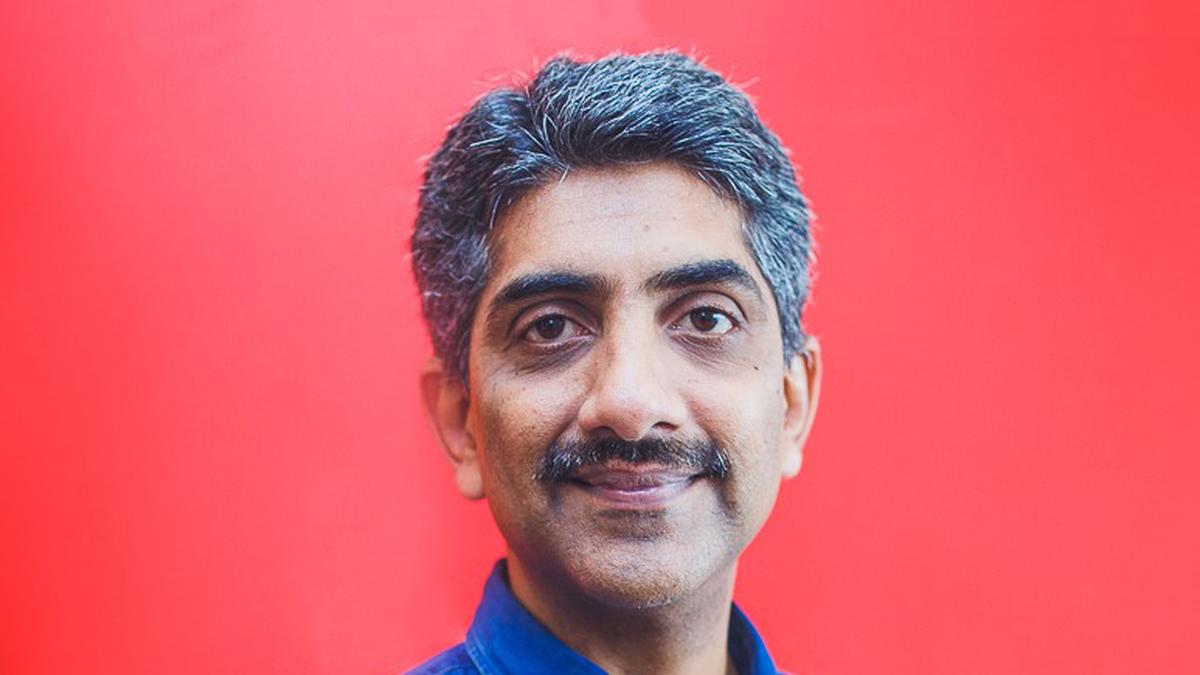

Advertising, as we know, seems almost dead. Marks are seen making more Instagram reels than 30 second commercials. The planning and strategy function in advertising agencies must obviously keep the step. Like Prem Narayan, strategy director of Ogilvy India, explains: “Fundamentally, of a world of a great idea, we are now moving to many pieces of content and smaller manifestations of that great idea or ideas of differences in the Difsterte platforms.” Ogilvy India, which he joined in 2004, and was advised by Madhukar Sabnavis. The planning team had only three or four people at that time. Today says about 100!
Narayan, who grew up in Tamil Nadu, made her education largely in Madurai, her engineering course in Kerala and MBA in Pune, uses a football analogy to describe the planning function. “Creative people are the strikers because they are the ones who deliver the production that the world sees. The planners are the midfielders. We hope to give a good pass. In addition, our work is to facilitate the life of the defender, which is the management of our account.” Edited extracts of an interaction with Narayan in the evolutionary agency model:
As today’s customers are looking for more reels than ads, how are the strategy changing in the agencies?
The general advertising market in India is around ₹ 1.6 Lakh million rupees, or that about 50 percent is digital. For many or our clients, between 25 % and 70 percent or advertising expenditure is now digital. For D2C customers it can be more. So certainly the media have changed. Therefore, the client’s expectation of the agencies has also changed significantly.
From the good old times of a piece of content, we are now moving to 50 to 100 pieces of content of all children, content that the brands are presented, the influencers published, and so on. However, the brand still needs to speak as one voice. How will that happen? What I listen more and more about our clients is: “Can you at least, from a strategy level, gather all this content, so that we speak as a single brand and not it is not that it is not not? It also has much more complex, so customers need someone to simplify things. And who better than us to do that.
Someone has called the role of agencies today as an imaginative rehysitivity, turning an idea through different stories for a multiple of people. That has required a change in how agencies think.
Many advertising works now seems related to the customer experience and other things where consulting companies are surpassing. How do you deal with that?
There are two parts for that. I am improving advertising and content as a transmission, and this will be directed by an agency or a combination of many agencies, depending on how the client disconnects. And there, I think, we have an important role.
What is also happening is that many customers are using an idea to interact with consumers interactively. And that also leads to the generation of many first part data. For example, the birthday song campaign we made for Cadbury, which created unique songs for each user. We romia the idea, we enable it in the packaging: people could scan it, enter details and create their unique video. Or of course, there is technology involved, but the idea is still in the center of it. Similarly, the ‘joke in a bottle’ campaign, which we did for Sprite.
But the other parts are also becoming significant. Performance marketing has become very large because it’s like today’s sales. There are the accidents and the Deloittes who are doing it, and there are specialized agencies in performance marketing: obsellers have an agency called Verticurl, which has now become part of Ogilvy One, specialization in that territory.
Much of that work drives the lower funnel or part of the game of the game.
But you can feed the lower part of the funnel only if the customer hooks. As the saying goes, a customer does not buy an Audi at age 30 … He “buys” at age six. You have to create desire and intention of the brand to win. The work of brands and advertising is to take more people to the funnel, only then the operation of performance marketing at the bottom of the funnel.
As Unilever president recently said, the work of the brands is to create desire at scale. That is a phrase that will listen more and will be the new mantra for agencies.
What are the new market opportunities for advertising agencies?
The content will be a great play, and adapt the specific content for platforms such as Meta and Google is becoming quite important. Advertising agencies have to understand how people behave on the platforms and then deliver those behaviors. Our income will change to a child in the world more ‘more advertising’.
In addition, the strategy will be important to guide customers about the development of structures and letters, so that the influencers speak in a way that is in congruence with the brand. Those are territories in which, I think, much of our approach will be.
Also create experiences and compromise in the field is becoming a great thing with customers. I see a very strong role for activation agencies. You will see many things we did at Maha Kumbh this year, with clients such as Amazon and Fevicol, gaining ground. Those are opportunities for future income flows that would be unlocked as we advance, because today nothing is in the silo, so the activation of activation-mediation-creation-creativity.
I think we will move to a world where there will be many IP (intellectual property) like Coke Studio, because you want to build a year after a constant year. Agencies can associate brands to create those IP and execute them. We are already there in the execution in some, but that is something that we will have to strengthen.
I also believe that there is a role for consulting agencies, because it works with the client, understands them, defines the brand and observes how the entire funnel works, can sow the idea and take it to execution.
So, to what extent has Ogilvy achieved to unlock these opportunities?
Both in technology and content, we have a strong force. We have a content team of 100 people and 10 to 12 technologists who work internally in Ogilvy.
One of the sources of income that is really opening is our technology team sitting here and working for customers worldwide, both with Coca -Cola and with our mouths, we have the legs capable of doing so.
Now we are building Ogilvy One in India. Ogilvy One is a global entity that basically focuses on the experience and commitment of the client. And we have Verticurl, based in Coimbatore, which largely serves international clients.
Ogilvy One is something we hope to build with enough force in the next two or three years. The consultation is also something we want to start and, hopefully, we must do it in 2026.
Will Trump’s rates affect Indian advertising?
It will be a difficult year. There is no fleeing from him. Thought tariffs may not directly affect all our clients, there is a general impact on a macroeconomic level. When it happens and the general climate is difficult, how do customers grow? Should they focus more on rural markets? Are there more opportunities at the highest and most premium end of the market? Do we need to pivot in some categories? All these conversations are underway with many of our clients. We all have to duplicate this year and work harder, which is where I think the long -term relationships we have with our customers matter. We have customers who have legs with us for 20, 30 and only 50 years.