


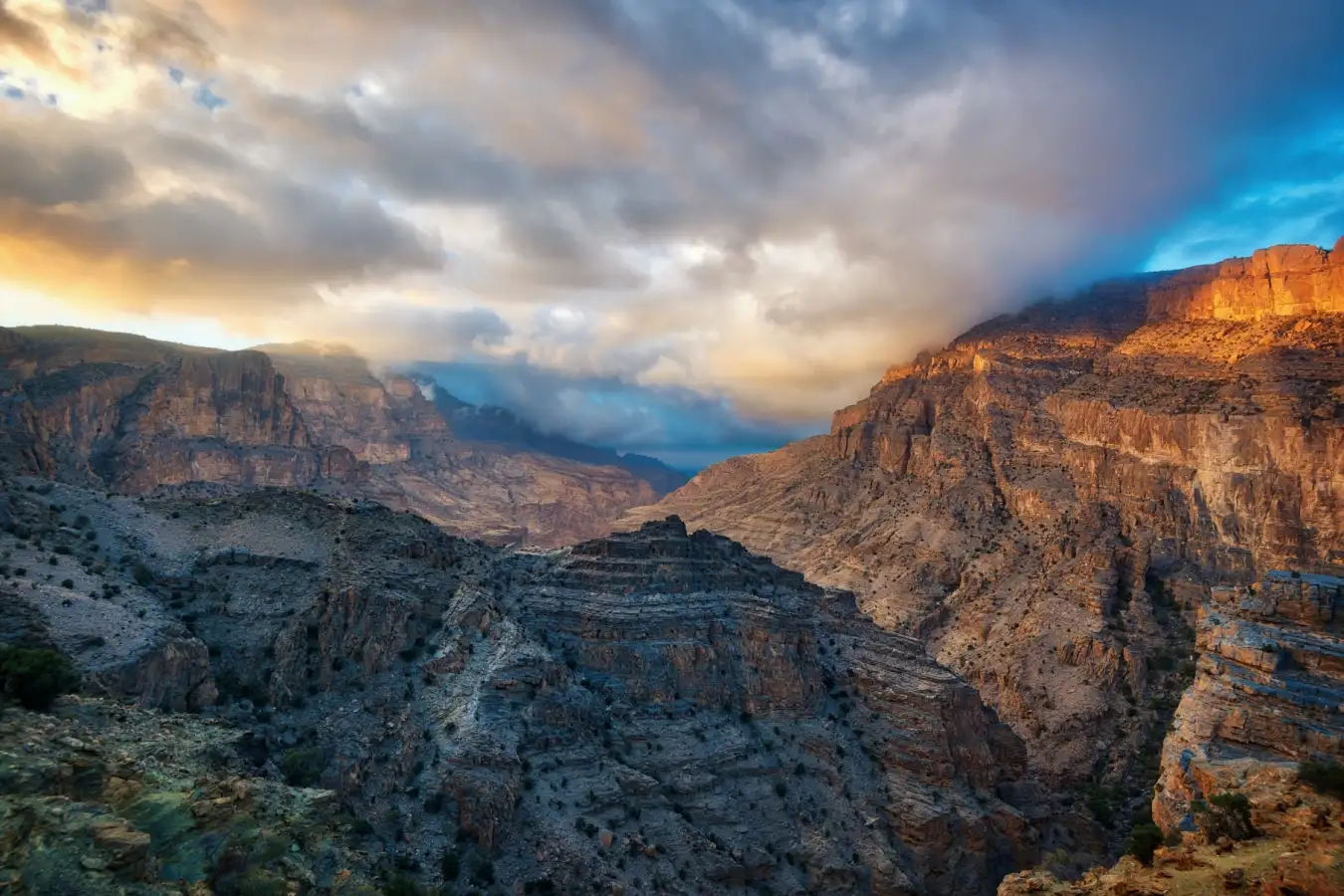

A section of the earth mantle under Oán seems to be unusually warm, in which researchers say it can be the first known “ghost plume”, a hot rock column that emanates from the lower mantle without apparent volcanic activity on the surface.
The mantle feathers are mysterious manifestations of molten rock that are believed to transmit heat from the border of the core mantle to the surface of the earth, far from the edges of the tectonic plates. It is believed that boxes are believed under half of the continental plates, for example, under Yellowstone and the East Africa crack. “But all these are cases in which you have superficial volcanism,” says Simone Pilia from the King Fahd University of Petroleum and Minerals in Saudi Arabia. Oman does not have such volcanic clues.
Pilia came to suspect for the first time that there was a plume under “casual” Oman after he began analyzing new seismic data in the region. The observed speed of the waves generated by distant earthquakes slowed down in a cylindrical area under east of Oman, indicating that the rocks were less rigid than the surrounding material due to high temperatures.
Other independent seismic measurements showed key limits where deep minerals on Earth change the phases consistently with a hot plume. These measurements suggest that the penitilla extends more than 660 kilometers below the surface.
The presence of a plume could also explain why the region has continued to increase in elevation much after tectonic compression, a geological process where the earth’s crust was squeezed, stopped. It also fits with models of what could have caused a change in the movement of the Indian tectonic plaque.
“The more we gathered evidence, the more we were convinced that it is a plume,” says Pilia, who named the geological characteristic of the “Dani Plume” after his son.
“It is plausible” that a Penacho really there, says that Saskia goes to Imperial College London, adding that the study is “thorough.” However, she points out that narrow feathers are notoriously difficult to detect.
However, if it exists, the presence of a “ghost penacha” contained inside the mantle by the relatively thick beans of the rocky layer would suggest that there are others, says Pilia. “We are convinced that Dani’s pen is not alone.”
If there are many other hidden columns, it could mean that the heat of the nucleus flows directly through the mantle through the columns, instead of through a slower convection, says Goes. “It has implications, potentially, for the evolution of the Earth if we obtain a different estimate of how much heat comes out of the mantle.”
Topics: